

Are security guards law enforcement? Learn the key differences, powers, and limits of security guards vs police in this simple, clear guide.
If you’ve ever seen a uniformed guard at a mall or event, you’ve probably wondered: are security guards law enforcement?
It’s a fair question. They look official. They keep order. Sometimes, they even detain people.
But here’s where things get interesting.
While both roles help keep people safe, they are not the same. And knowing the difference matters—especially if you’re hiring security, attending events, or just want to understand your rights.
For example, if you’re working with security guards Melbourne for an event, it helps to know exactly what they can and can’t do. That knowledge saves you from wrong expectations.
Let’s get into it.
Are Security Guards Law Enforcement in Legal Terms?
No, security guards are not law enforcement.
Law enforcement officers, like police, work for the government. Security guards usually work for private companies or individuals.
Here’s the simple breakdown:
- Law enforcement officers
- Work for the government
- Enforce public laws
- Have full legal authority (arrests, investigations, etc.)
- Security guards
- Work for private companies or clients
- Protect property, people, and assets
- Have limited authority based on local laws
According to the Bureau of Labor Statistics, security guards focus on prevention, monitoring for risks, reporting issues, and maintaining order, rather than enforcing the law.
So when people ask, are security guards law enforcement, the clear answer is no, but they do support law enforcement in many situations.
Why People Think Security Guards Are Law Enforcement
This confusion happens all the time. And honestly, it makes sense.
Here’s why:
1. They Wear Uniforms
Uniforms create authority. A guard in full gear can look very similar to a police officer.
2. They Handle Conflict
At events or malls, guards:
- Break up fights
- Remove troublemakers
- Control crowds
That feels like police work.
3. They Work Alongside Police
In many cases, guards:
- Call the police
- Hold suspects until police arrive
- Share incident reports
Because of this, people assume they have the same power.
Are Security Guards Law Enforcement When It Comes to Arrests?

This is where things get a bit tricky.
Security guards can detain someone, but not in the same way police arrest people.
What security guards can do:
- Perform a citizen’s arrest (depending on local laws)
- Detain someone suspected of a crime
- Use reasonable force if needed
What they cannot do:
- Conduct full criminal investigations
- Charge someone with a crime
- Use unlimited force
According to the Australian Government Attorney-General’s Department, a citizen’s arrest must follow strict rules, and misuse can lead to legal trouble.
So again, if you’re asking, are security guards law enforcement? Their ability to detain people doesn’t make them police. It just gives them limited legal rights.
Key Differences Between Security Guards and Law Enforcement
Let’s make this very clear and easy to scan.
| Feature | Security Guards | Law Enforcement |
| Employer | Private company | Government |
| Authority | Limited | Full legal authority |
| Training | Basic to advanced (varies) | Extensive academy training |
| Main role | Prevention & protection | Law enforcement & investigation |
| Arrest powers | Limited (citizen’s arrest) | Full arrest powers |
This difference matters more than you think, especially in legal situations.
Are Security Guards Law Enforcement at Events?
When you attend concerts, festivals, or corporate events, you’ll see a lot of guards.
But are security guards law enforcement in these settings? Still no.
Their role in event security Melbourne (and anywhere else) is focused on:
- Crowd control
- Access control (checking tickets, IDs)
- Emergency response support
- Preventing disturbances
They act as the first line of defense, but if things escalate, the police step in.
From my experience, event security is more about prevention than reaction. A good guard stops problems before they even start.
Legal Authority: What Security Guards Can and Can’t Do
Let’s simplify this further, because this is where most people get confused.
What they CAN do:
- Ask you to leave private property
- Deny entry
- Monitor surveillance systems
- Detain someone (within legal limits)
What they CANNOT do:
- Search you without consent (in most cases)
- Use excessive force
- Act outside the property they’re hired to protect
- Enforce public laws like police
The International Foundation for Protection Officers explains that guards must always act within private authority, not public law enforcement power.
Are Security Guards Law Enforcement in Different Countries?
This is where things can vary.
The answer to the question of whether security guards are law enforcement is still no globally, but their powers vary by country.
In Australia:
- Guards must be licensed
- Strict rules on use of force
- Citizen’s arrest laws apply
In the United States:
- Rules vary by state
- Some guards can be armed
- Licensing and training differ
In the UK:
- Regulated by the Security Industry Authority
- Strong focus on training and licensing
So while the core role stays the same, the level of authority can shift slightly.
When Do Security Guards Work Closely With Law Enforcement?
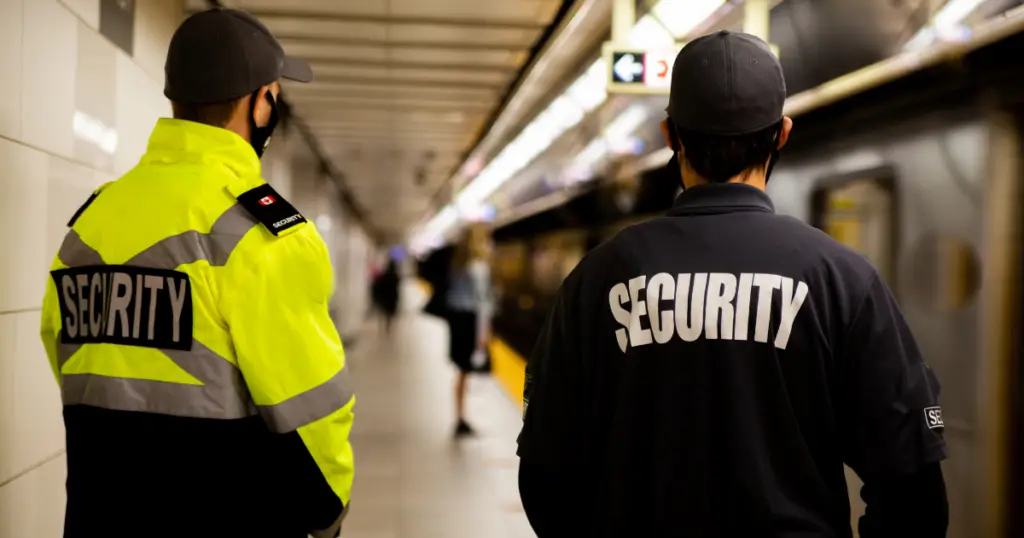
Even though they’re not the same, they often work together.
Here’s how:
- Reporting incidents to police
- Preserving evidence (like CCTV footage)
- Managing scenes until police arrive
- Supporting investigations with witness accounts
In large venues or events, this teamwork is critical.
Think of it this way:
Security guards are the eyes and ears, while police are the decision-makers and enforcers.
Are Security Guards Law Enforcement or Just Observers?
They’re definitely more than observers.
A well-trained guard:
- Spots risks early
- Prevents theft or damage
- Keeps people safe
- Responds quickly to incidents
But they still operate within limits.
That’s why professional training matters. Organizations like ASIS International stress that modern security roles are about risk management, not law enforcement.
Why This Difference Matters to You
You might be wondering, “Why should I care?”
Here’s why it matters:
If you’re hiring security:
- You know what services to expect
- You avoid unrealistic demands
- You choose the right level of protection
If you’re dealing with a guard:
- You understand your rights
- You know what they can legally do
- You avoid unnecessary conflict
If you’re attending events:
- You know who to approach for help
- You understand how situations are handled
This clarity saves you stress and sometimes legal trouble.
Conclusion
So, are security guards law enforcement? No, they are not.
But they play a vital role in keeping people and property safe.
They:
- Prevent problems
- Manage risks
- Support police when needed
Once you understand the difference, everything makes more sense, from how events are run to how incidents are handled.
And if you ever find yourself in a situation involving a security guard, you’ll know exactly what’s within their power and what isn’t.