
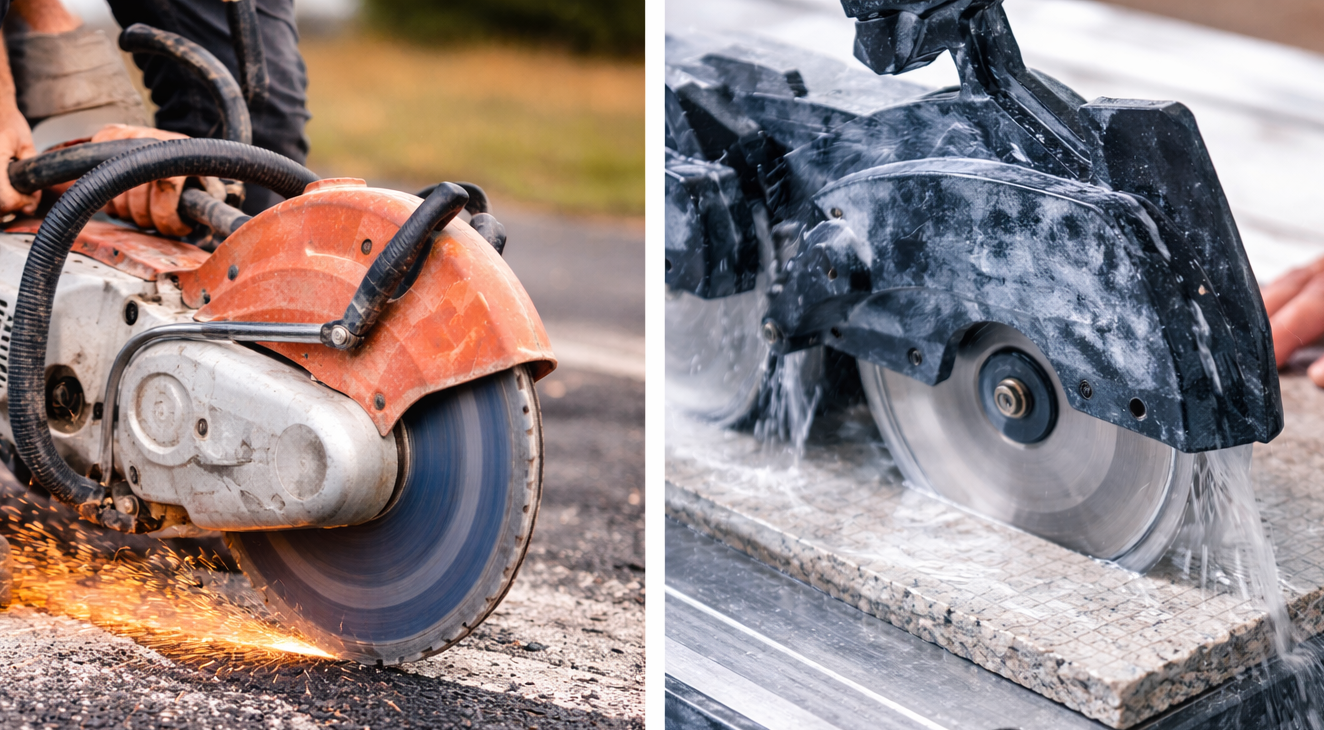
What are diamond blades used for? Learn how diamond blades cut concrete, stone, tile, and asphalt, plus when to use different types for better results.
If you’ve ever watched someone cut through concrete or tile like it was butter, chances are they were using a diamond blade.
So what are diamond blades used for?
They are special cutting tools designed to slice through extremely hard materials such as concrete, asphalt, stone, brick, and tile.
Instead of traditional teeth like a wood saw blade, these blades use industrial diamonds embedded along the edge to grind through tough surfaces.
Contractors, builders, tile installers, and road crews rely on these blades every day.
Even homeowners use them for renovation projects, such as cutting pavers or ceramic tiles.
You’ll often see professionals working with diamond saw blades on tools such as circular saws, angle grinders, masonry saws, and concrete saws.
The blade does the heavy work by grinding material away with diamond particles.
Once you understand how these blades work and where they are used, it becomes clear why they are essential in construction and stonework.
How Diamond Blades Work
Diamond blades do not cut the same way wood saws do.
A typical wood blade uses teeth to slice through fibers. Diamond blades work more like a grinding wheel.
The outer rim of the blade contains tiny industrial diamonds held in a metal bond. As the blade spins:
- The diamonds scrape and grind the surface
- Material slowly wears away
- New diamonds become exposed as the bond wears
This continuous exposure keeps the blade cutting efficiently.
According to the U.S. Geological Survey, industrial diamonds are widely used in cutting tools because they are the hardest natural material on Earth.
That extreme hardness allows diamond blades to cut materials that regular steel blades cannot handle.
Common Materials Diamond Blades Cut
Diamond blades are used to cut many construction materials.
Here are some of the most common.
1. Concrete
Concrete is one of the main materials these blades are designed for.
Workers use diamond blades to cut:
- sidewalks
- driveways
- concrete slabs
- foundations
- expansion joints
Concrete cutting is common during renovations, road repairs, and plumbing work.
2. Asphalt
Road crews rely heavily on diamond blades for asphalt cutting.
They are used for:
- road repair
- trenching for utilities
- pavement removal
- highway construction
The blades grind through asphalt without clogging.
3. Brick and Masonry
Brick and masonry materials are extremely dense.
Diamond blades make clean cuts when working with:
- clay bricks
- concrete blocks
- mortar joints
- stone veneer
This helps contractors create accurate edges during construction.
4. Tile
Tile installers use diamond blades every day.
They cut materials such as:
- ceramic tile
- porcelain tile
- marble tile
- granite tile
Diamond blades help prevent cracking and chipping, especially with delicate tile surfaces.
5. Natural Stone
Stone fabrication shops depend on diamond blades for shaping stone slabs.
Common stone materials include:
- granite
- marble
- slate
- limestone
- quartz
These stones are far too hard for regular blades.
Industries That Use Diamond Blades
Diamond blades show up in many industries.
Here are the main ones.
1. Construction
Construction crews use diamond blades for cutting structural materials such as concrete and masonry.
Common construction tasks include:
- cutting walls and slabs
- adjusting concrete forms
- trimming blocks and bricks
- creating expansion joints
Without diamond blades, many of these jobs would take far longer.
2. Road and Infrastructure Work
Road workers depend on diamond blades when cutting pavement.
They use them for:
- repairing highways
- installing drainage systems
- creating trenches for cables and pipes
- removing damaged sections of road
These jobs require precise and powerful cutting tools.
3. Tile Installation
Tile professionals use diamond blades for accurate tile cuts.
They rely on them when installing:
- bathroom tiles
- kitchen backsplashes
- flooring tiles
- countertops
Diamond blades produce smoother edges compared with standard blades.
4. Stone Fabrication
Stone shops use diamond blades to shape countertops and slabs.
Granite and marble fabrication requires:
- straight cuts
- curved cuts
- trimming large slabs
According to the Natural Stone Institute, diamond tools are essential for cutting and shaping natural stone surfaces.
Types of Diamond Blades and Their Uses
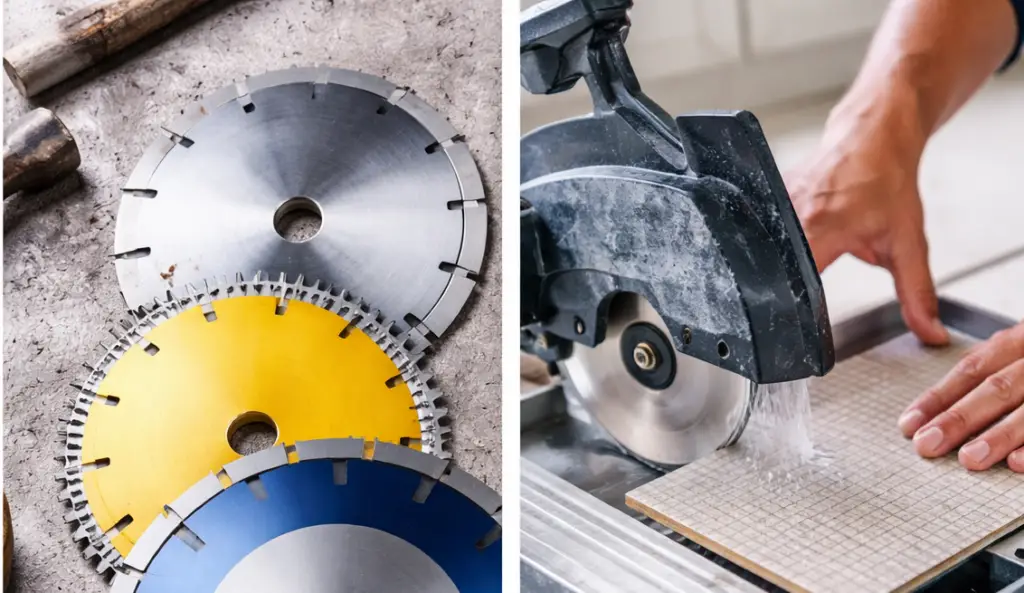
Not all diamond blades are the same. Different designs work better for different materials.
1. Segmented Diamond Blades
Segmented blades have small gaps between sections along the rim.
These gaps help with:
- cooling the blade
- removing debris
- faster cutting
They are often used for:
- concrete
- brick
- block
- asphalt
These blades are common in heavy construction work.
2. Continuous Rim Diamond Blades
Continuous rim blades have a smooth edge with no gaps.
This design produces very clean cuts.
They are ideal for:
- tile
- porcelain
- marble
- granite
Tile installers prefer these blades because they reduce chipping.
3. Turbo Diamond Blades
Turbo blades have a slightly serrated rim.
This design gives a balance between:
- speed
- smooth cutting
They are commonly used for:
- stone
- concrete
- brick
- pavers
Turbo blades are popular with contractors who want versatility.
Wet Cutting vs Dry Cutting

Diamond blades can be used either wet or dry, depending on the blade type.
Wet Cutting
Wet cutting uses water while cutting.
Water helps:
- cool the blade
- reduce dust
- extend blade life
It is commonly used for tile and stone cutting.
Dry Cutting
Dry cutting does not use water.
These blades are designed to handle higher heat levels.
Dry cutting is common in outdoor construction jobs where water is not practical.
The Occupational Safety and Health Administration (OSHA) recommends using wet-cutting methods whenever possible to reduce exposure to harmful dust during concrete cutting.
Why Diamond Blades Last Longer
Diamond blades last much longer than traditional blades.
There are several reasons for this.
- Industrial diamonds are extremely hard. They resist wear even when cutting tough materials.
- The blade continuously renews itself. As the metal bond wears down, fresh diamonds appear on the surface.
- They reduce blade damage. Because the blade grinds material rather than tearing it, stress on the blade stays lower.
This combination makes diamond blades one of the most durable cutting tools used in construction.
Signs a Diamond Blade Needs Replacement
Even the best blades wear out over time.
Watch for these warning signs.
- Slower cutting speed. If the blade struggles to cut through material, it may be worn down.
- Burn marks. Excess heat during cutting may signal that the blade is dull.
- Smooth blade edge. When the diamond edge becomes smooth, the cutting diamonds may be gone.
- Excess vibration. A damaged blade may wobble or vibrate during use.
Replacing a worn blade helps maintain safe and accurate cutting.
Safety Tips When Using Diamond Blades
Diamond blades are powerful tools, so safety matters.
Follow these basic practices.
Wear protective equipment
Always use:
- safety glasses
- gloves
- hearing protection
- dust masks
Use the correct blade for the material
Cutting the wrong material can damage the blade or cause accidents.
Allow the blade to cool
Overheating reduces blade life.
Take breaks during long cutting sessions.
Secure the material
Loose materials can shift during cutting and create hazards.
Proper setup helps prevent accidents.
Conclusion
Diamond blades are specialized cutting tools designed to handle some of the toughest materials used in construction and renovation.
They are commonly used for cutting:
- concrete
- asphalt
- brick
- tile
- stone
- masonry materials
Instead of slicing like traditional saw blades, diamond blades grind through materials using industrial diamonds embedded along the edge.
Different blade designs, such as segmented, turbo, and continuous rim, allow professionals to choose the best tool for each job.
This flexibility makes diamond blades essential for industries like construction, road repair, tile installation, and stone fabrication.
Understanding what diamond blades are used for helps ensure the right blade is chosen for the right task, improving cutting performance, safety, and overall project results.
